
Minimum Annual Payments for Super Income Streams

The Australian Taxation Office (ATO) reminds taxpayers that a Self-Manager Superannuation Fund (SMSF) must pay a minimum amount each year to a member who is receiving a pension that commenced on or after 20 September 2007 (eg account based pensions). If the minimum payment is not made by 30 June, this can result in adverse taxation consequences for the member.
In response to COVID-19, the government temporarily reduced superannuation minimum drawdown requirements for account-based pensions and similar products by 50% for the 2020, 2021, 2022 and 2023 financial years.
However, for the 2024 financial year, the 50% reduction in the minimum pension drawdown rate will no longer apply.
That means that, from 1 July 2023, when taxpayers calculate the minimum annual payment for their pension, the 50% reduction will not apply to the calculated minimum annual payment.
Changes to Deductions This Tax Time

Taxpayers who are small business owners operating from home, or who use a vehicle for business purposes, need to be aware of some changes when claiming deductions this tax time, including the following:
Cents-per-kilometre method - the cents-per-kilometre method for claiming car expenses has increased from 72 cents to 78 cents per kilometre in the 2023 income year. For taxpayers using this method, the 78 cents per kilometre rate covers all their vehicle running expenses, including registration, fuel, servicing, insurance, and depreciation. Taxpayers using this method cannot claim these costs separately.
Car limit for business owners - the car limit has also increased to $64,741 for the 2023 income year. The car limit is the maximum value taxpayers can use to work out the depreciation of passenger vehicles (excluding motorcycles or similar vehicles) designed to carry a load of less than one tonne and fewer than nine passengers.
Work from home business expenses - for the 2023 income year, the 'fixed rate method' (for taxpayers operating their business from home) increased from 52 cents to 67 cents per hour worked from home, and taxpayers are no longer required to have a dedicated home office space. To claim work from home expenses, you must have a record of your hours that you have worked from home. The fixed rate method covers electricity, gas, stationery, computer consumables, internet, and phone usage.
Small Business and Charities Energy Bill Relief

The Small Business Development Corporation is administering and delivering the Small Business and Charities Energy Bill Relief program to eligible small businesses and charitable organisations that operate in embedded networks in WA. This will be in the form of a direct payment of $650 (GST Free) to the bank account of eligible businesses.
Embedded networks include examples such as shopping centres, businesses operating from airports, ports and industrial parks, businesses that have a sub-meter linked to a master meter controlled by the landlord, and circumstances where landlords purchase electricity from energy providers and on-sell the electricity to their small business tenants.
This relief excludes Energy Price Relief Rebates (rebates) for direct customers of Synergy and Horizon Power, who will credit the payments to electricity bills of these businesses. Eligible small businesses and charities that are billed by alternate private retailers, such as Alinta and Perth Energy, may apply for the Small Business and Charities Energy Bill Relief program.
The Small Business and Charities Energy Bill Relief program is part of the Energy Price Relief Rebates, an initiative co-funded by the Commonwealth and State Government to reduce the cost of electricity bills for eligible small businesses.
Applications for Small Business and Charities Energy Bill Relief close at 4pm on 30 November 2023.
More information on eligibility and how to apply can be found here.
Know the Rules for Accessing Superannuation

The ATO has reminded Self-Managed Superannuation Funds ('SMSF') trustees that their SMSF must be operated for the sole purpose of providing retirement benefits for its members. This means SMSF trustees can't use funds from their SMSF to pay for personal or business expenses. This is known as 'illegal early access' of superannuation, and severe penalties apply.
The ATO also reminds SMSF trustees that there are rules regarding what they can invest in when dealing with a related party.
The ATO has recently released a factsheet to help SMSF trustees understand the rules on accessing their superannuation, and make sure they (and their business, if any) comply with the rules surrounding SMSF's.
New 15% Super Tax to Apply from 1 July 2025
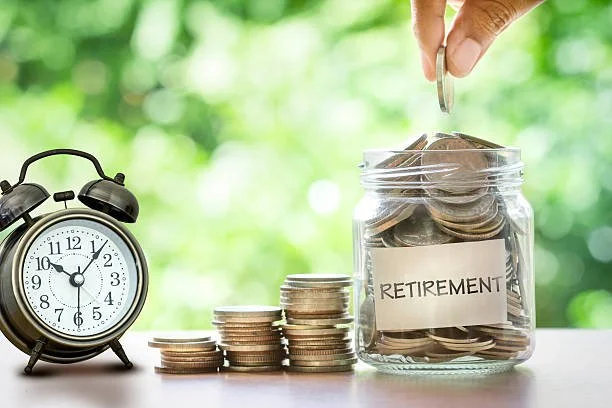
The Government recently announced it will be imposing a 15% additional tax on individuals that have more than $3 million in superannuation. The new measure is expected to commence from 1 July 2025 (ie the 2026 income year).
The main takeaways from the information provided thus far include the following:
The additional 15% tax will broadly apply to the annual movement in the value of an individual's superannuation balance, adjusted for withdrawals and contributions. These 'earnings' are further adjusted to ensure only the proportion corresponding to the balance above $3 million will be subject to tax.
There will be no limit imposed on the size of the superannuation account balances.
Individuals will have the choice of paying the tax liability personally or from their superannuation fund.
In current terms, the Government expects the new tax will apply to 0.5% of people with money in superannuation (around 80,000 people). However, the proposal does not currently allow for indexation of the $3 million threshold, so more individuals may be impacted in the future.
Electric Vehicle Home Charging Rates: Cents per km

The ATO has recently released draft guidelines setting out a methodology for calculating the cost of electricity when an electric vehicle ('EV') is charged at an employee's or individual's home.
The draft guideline may be relied on by employers and individuals who satisfy the required criteria for FBT and income tax purposes respectively, as set out in the draft guidelines.
The employer or individual can choose if they want to use the methodology outlined in the draft guidelines or if they would like to determine the cost of the electricity by determining its actual cost.
The choice is per vehicle and applies for the whole income or FBT year. However, it can be changed by the employer or individual from year to year.
Cents-per-kilometre rate
The rate for the FBT tax year or income year commencing on or after 1 April 2022 is 4.2 cents per km (the "EV home charging rate"), which is multiplied by the relevant number of kilometres travelled by the electric vehicle in the relevant income year or FBT year.
However, if electric vehicle charging costs are incurred at a commercial charging station, a choice has to be made:
The EV home charging rate can be used, but only if the commercial charging station cost is disregarded.
If the commercial charging station cost is used, the EV home charging methodology cannot be applied.
Further, all necessary records (such as receipts) must be kept to substantiate the claim, as per normal record-keeping rules.
Record-keeping
If a taxpayer wishes to rely on the EV home charging rate to calculate their electricity charging expenses, they will need to keep a record of the distance travelled by the car (i.e. generally odometer records) in either the applicable FBT year to 31 March or the income year to 30 June.
Also, if an employer chooses to apply the draft guidelines and the EV home charging rate for income tax purposes, to satisfy the record-keeping requirements, they must have:
A valid logbook to use the logbook method of calculating work-related car expenses (and it is recommended that a logbook is maintained to demonstrate work-related use of vehicles, regardless); and
One electricity bill for the residential premises in the applicable income year to show that electricity costs have been incurred.
Application
It should be noted that the draft guidelines can only be relied on in relation to zero emissions vehicles.
The draft guidelines cannot be relived on, and the EV home charging rate cannot be used, if, for example, the vehicle is a plug-in hybrid which has an internal combustion engine.
Once finalised, the draft guidelines will apply from:
1 April 2022 for FBT purposes; or
1 July 2022 for income tax purposes.
FBT Exemption for Electric Cars
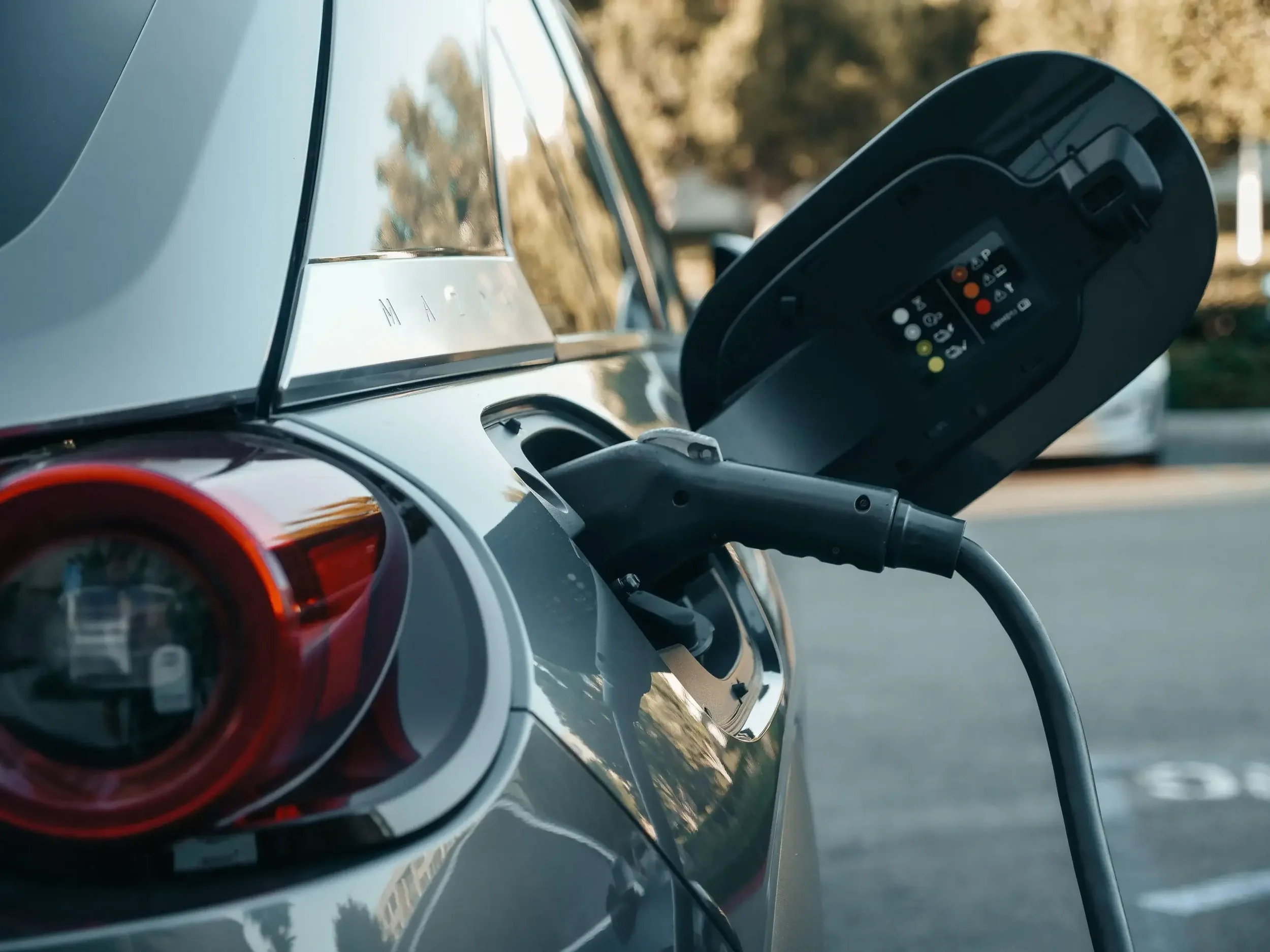
Until recently, the FBT consequences for providing electric cars to employees were effectively the same as any other car. However, from 1 July 2022, FBT is no longer payable on benefits provided for eligible electric cars and associated expenses. Practically, this exemption will be relevant for the first time in the FBT year.
Broadly, benefits provided for electric cars will be exempt from FBT where the following criteria are met:
The car is a zero or low-emissions vehicle;
The first time the car is both held and used is on or after 1 July 2022;
The car is used by a current employee or their associate(s) (eg a family member); and
Luxury car tax has never been payable on the import or sale of the car.
Registration, insurance, repairs, maintenance, and fuel expenses provided for eligible electric cars are also exempt from FBT.
Note that, while the benefit is exempt from FBT, the taxable value of the benefit must still be determined when working out whether an employee has a reportable fringe benefits amount to be included on their income statement or payment summary.
Last Chance to Claim Deductions Under Temporary Full Expensing

Deductions under 'temporary full expensing' are only available in the 2021, 2022 and 2023 income years, and are coming to an end on 30 June 2023.
Under temporary full expensing, businesses with an aggregated turnover of less than $5 billion can generally claim a deduction for the full cost of the eligible new assets first held, used or installed ready for use between 6 October 2020 and 30 June 2023, as well as (in some circumstances) costs of improvements to those assets and also the cost of eligible second-hand assets.
Taxpayers can choose to opt out of temporary full expensing for an income year for some or all of their assets, and claim a deduction using other depreciation rules, but notifying the ATO in their tax return that they have chosen not to apply temporary full expensing to those assets.
Low and Middle Income Tax Offset Not Extended

The 2023-2024 Budget did not announce any extension of the low and middle income tax offset (LMITO) beyond the 2021-2022 income year. The LMITO has now ceased and been fully replaced by the low income tax offset (LITO).
With no extension of the LMITO announced in this Budget, 2021-2022 was the last income year that the offset was available.
As a result, low-to-middle income earners may see their tax refunds from July 2023 reduced by between $675 and $1,500 (for incomes up to $90,000 but phasing out up to $126,000), all other things being equal.
head to superclone and explore more
2023/24 Budget Update
On 9 May 2023, Treasurer Jim Chalmers handed down the 2023/24 Federal Budget.
Some of the measure announced by the Government (including some which were announced prior to the Budget), include:
From 1 July 2026, employers will be required to pay their employees' superannuation at the same time as their salary and wages;
Providing businesses with annual turnover of less than $50 million with an additional 20% deduction on spending that supports electrification and more efficient use of energy (the 'Small Business Energy Incentive'); and
Increasing the capital works tax deduction depreciation rate for eligible new build-to-rent projects from 2.5% to 4% per year.
In addition to these, one of the most important aspects of this Budget was that the Government has provided some further depreciation relief for small businesses once temporary full expensing comes to an end on 30 June 2023.
Specifically, from 1 July 2023 until 30 June 2024, the Government will temporarily increase the instant asset write-off threshold for small businesses (with an aggregated annual turnover of less than $10 million) from $1,000 to $20,000. Assets valued at $20,000 or more (which cannot be immediately deduced) can continue to be placed into the small business simplified depreciation pool.
Also, the provisions that prevent small businesses from re-entering the simplified depreciation regime for five years if they opt-out will continue to be suspended until 30 June 2024.
Other important measures the Government announced include:
Amending (and limiting) the non-arm's length income ('NALI') provisions which apply to expenditure incurred by superannuation funds;
Reducing the tax concessions available to individuals with a total superannuation balance exceeding $3 million; and
Exempting lump sum payments in arrears from the Medicare levy.
Further Eligibility Age Change for Downsizer Contribution

In another recent legislative change, the eligibility age to make a downsizer contribution into superannuation has been reduced to 55 from 1 January 2023.
This further reduces the downsizer eligibility age, which changed from 65 t0 60 from 1 July 2022.
From 1 January 2023, eligible individuals aged 55 years or older can choose to make a downsizer contribution into their super fund of up to $300,000 ($600,000 per couple) from the proceeds of selling their home that has been held for at least 10 years and qualifies for at least a partial main residence exemption.
There are no changes to the remaining eligibility criteria.
Key dates for downsizer contributions:
Eligible individuals aged 55 years or older can make a downsizer contribution from 1 January 2023.
For an downsizer contributions made between 1 July 2022 and 31 December 2022, eligible individuals must be aged 60 years or older at the time of making their contribution.
Prior to 1 July 2022, the eligibility age was 65 years and over.
Other important information to consider for 55-59 year olds:
Individuals have 90 days from receiving the sale proceeds of their home to make any downsizer contribution. This means if any individual receives the proceeds of sale prior to 1 January 2023, so long as they are still making it within 90 days of receiving the proceeds.
Unlike most other contributions into superannuation, there is no upper age limit for being eligible to make a downsizer contribution. Even a 95 year old could make a downsizer contribution, and there is no need to satisfy the work test!
Transfer Balance Cap Indexation
An individual's transfer balance cap (TBC) determines the maximum amount they can commit to a retirement phase interest in their superannuation fund, such as an account-based pension, without it being subject to penal taxation.
When the TBC concept was introduced with effect from 1 July 2017, it was initially $1,600,000. It increased by $100,000 as of 1 July 2021 to $1,700,000. The TBC increases in $100,000 increments (or multiples of $100,000) in line with the Consumer Price Index (CPI).
As a result of a substantial increase in the CPI, the TBC is due to increase on 1 July 2023 by $200,000.
Accordingly, an increase in the TBC is seen as a good thing, as it potentially means an individual can have more of their superannuation interest supporting a tax-free pension.
Individuals who start their first retirement phase income stream (otherwise known as a pension) on or after 1 July 2023 will have a TBC of $1.9 million. From 1 July 2023 individuals will have a TBC of between $1.6 million and $1.9 million.
An individual who already had a transfer balance account and at any time met or exceeded their personal TBC will not be entitled to indexation, and their personal TBC will remain the same.
For example, an individual who started their first retirement phase income stream, an account-based pension, on 1 January 2022 with a value of $1,700,000 at the time of commencement, would have fully utilised their then TBC of $1,700,000. Such an individual, having already fully utilised their TBC, will not gain any benefit from the increase in the TBC due to indexation.
Where an individual has partially utilised their TBC before 1 July 2023, instead of benefiting from the full $200,000 increase in the TBC, they will have access to a proportional indexation of their TBC based on the unused cap percentage of their transfer balance account.
Significant Change to Claiming Working from Home Expenses

Before 1 July 2022, an individual taxpayer that incurred additional deductible expenses as a result of working from home had a choice of three methods to claim these expenses.
These choices were:
The shortcut method - which was available from 1 March 2020 to 30 June 2022
The fixed-rate method - which was available from 1 July 1998 to 30 June 2022
Actual expenses, that is calculating the actual expense incurred as a result of working from home.
From 1 July 2022, as a result of the Practical Compliance Guideline (PCG 2023/1) by the Australian Taxation Office (ATO), the shortcut method and the fixed-rate method have both been abolished.
A replacement method that can be used instead of the actual expenses method (which has not been abolished) is the revised fixed-rate method.
Under the revised fixed-rate method, a deduction can be claimed of 67 cents per hour for energy expenses (electricity and gas), internet expenses, mobile and home phone expenses, and stationery and computer consumables.
Other expenses associated with working from home, such as depreciation of home office furniture and a personally owned computer used for work purposes, will need to be calculated on an actual basis when using the revised fixed-rate method.
To claim a deduction under the new fixed-rate method, an individual needs to meet three criteria, which are:
The individual is working from home while carrying out their employment duties or carrying on their business on or after 1 July 2022.
They are incurring additional running expenses of the kind outlined in the above discussion as to what the 67 cents per hour amount reflects, as a result of working from home.
They keep and retain relevant records in respect of the time they spend working from home and for additional running expenses (covered by the rate per hour) they are incurring.
There are strict record keeping requirements associated with this new method.
For the year ending 30 June 2023, a taxpayer using this new method will need to keep a record which is representative of the total number of hours worked from home during the period 1 July 2022 to 28 February 2023.
The taxpayer will also need to keep a record of the total number of actual hours they worked from home for the period 1 March 2023 to 30 June 2023. The records of the actual hours worked from home could be maintained by timesheets, rosters, time-tracking apps, logs of time spent accessing employer systems or online business systems, or a diary kept contemporaneously.
For the year ending 30 June 2024 and later income years, a taxpayer using this method must also keep a record of actual hours worked from home for the entire year.
Under both the shortcut method and the previous fixed-rate method, there was no need for detailed record keeping of the actual hours worked from home for the entire year. Estimates were acceptable. This is a significant change and increases the record keeping burden on taxpayers.
Another significant change, which results in an increase in record keeping obligations under the revised fixed-rate method, is that in relation to running costs (such as energy costs, phone and internet costs), a taxpayer needs to maintain at least one monthly or quarterly bill. This is because the ATO now requires proof that the individual has incurred the running costs represented by the 67 cents per hour deduction.
Non-Deductible Threshold Removed for Self-Education Purposes

Self-education expenses are generally tax-deductible for individuals if there's sufficient connection with your income-producing activities. However, until new legislation was recently passed, the amount you could deduct was limited by s82A of the Income Tax Assessment Act 1936 so that only the amount spent over a $250 threshold was deductible.
This threshold was an artefact from when the self education deduction measure was first introduced more than 40 years ago, alongside a long-repealed concessional tax rebate of $250. The original intention of the deduction limit was to ensure that taxpayers didn't receive both the rebate and a tax deduction for the same set of expenses.
With the non-deductible threshold removed, you will only need to ensure the following applies when you claim a self-education deduction:
You incurred the expense in gaining or producing your assessable income.
The expense isn't private, domestic or capital in nature.
The deduction isn't prevented by another provision of the tax law (eg such as some childcare and travel expenses that would previously been useable to reduce the $250 threshold).
The changes applies for tax assessments for the 2022-2023 income year and onwards.
Electric Vehicle FBT Exemption Legislation is Now Law
Legislation to make certain electric vehicles exempt from Fringe Benefits Tax (FBT) has now been enacted into law.
Certain zero or low emission vehicles, provided as a car benefit on or after 1 July 2022, can be exempt from FBT.
For this exemption to apply, various criteria needs to be satisfied.
The car needs to have been both held and used for the first time by the employer on or after 1 July 2022 and it cannot have been subject to the luxury car tax when it was purchased.
For the 2023 income year, to qualify for this exemption, the car needs to cost less than the luxury car tax threshold for fuel efficient vehicles of $84,916.
A vehicle is a zero or low emissions vehicle if it meets both of these conditions:
It is either a battery electric vehicle, hydrogen fuel cell electric vehicle or plug-in hybrid electric vehicle.
It is designed to carry a load of less than 1 tonne and fewer than 9 people, including the driver.
Motorcycles and scooters are not cars for FBT purposes and do not qualify for the exemption, even if they are electric.
Please note that in relation to plug-in hybrid electric vehicles, there is a specific limitation on the FBT exemption. From 1 April 2025, a plug-in hybrid electric vehicle will not be considered a zero or low emissions vehicle under FBT law.
There are special provisions allowing the exemption to continue when a plug-in vehicle was provided as an exempt benefit under an agreement entered into before 1 April 2025 that continues after this date.
Although the private use of an eligible electric car is exempt from FBT, an employer still needs to include the notional value of the benefit when working out whether an employee has a reportable fringe benefits amount (RFBA). An employee has an RFBA if the total taxable value of the certain fringe benefits provided to them (or their associate) is more than $2,000 in an FBT year. The RFBA must be reported through Single Touch Payroll or on the employee's payment summary.
The amount of an RFBA reported for an employee is not added to an employee's taxable income for determining income tax and Medicare Levy liabilities. However, it is added to an employee's taxable income for calculating the Medicare Levy Surcharge liability, and is included in income tests for family assistance, child support assessments, and some other government benefits and obligations.
How To Treat Commercial Website Expenditure
It is essential these days for a business to have a website to promote their products or services. Left without guidance following the withdrawal of TR 2001/6 in 2009, business owners have treated website expenditure in many different ways. At least, this was the case until recently. The Australian Taxation Office have now issued ruling TR 2016/3 stating their guidelines on the deductibility of website expenditure.
Generally, expenditure acquiring or developing a website for a business is capital in nature. This means the website is a depreciating asset, classified as software, and can be depreciated and commonly claimed over a period of 5 years. For Small Business Entities under the Simplified Depreciation rules, if the cost is under the threshold, the cost can be claimed in full. If the cost is more than this threshold then the expense is allocated to the General Small Business Pool and depreciated as such. The threshold till the 30 June 2017 is $20,000 and will then return to $1,000.
However, the rules differ if there is an existing Software Development Pool. If the entity uses a Software Development Pool the expenditure must be allocated to this pool, and the Simplified Depreciation rules cannot be used.
Expenditure in maintaining a website can normally be claimed as a deduction. This will involve expenses such as domain registration, server hosting costs and minor enhancements to the existing website. However, if the alteration to the website is significant, it is open to question that the business is improved and the expenditure is likely to be capital in nature. In this case, the expenditure is not deductible but can be depreciated over a period of time.
Determining Capital vs Revenue
| Capital | Revenue |
| Expenditure incurred in acquiring or developing a commercial website for a new or existing business. | |
| Expenditure on a website where the expenditure represents an improvement to the business and structure. | |
| Labour costs directly referable to the enhancement. | Labour costs incurred as ordinary business expense that doesn’t enhance the business and structure. |
| Expenditure on software products that provide an enhancement of the structure of the business. This may be depreciable as ‘in-house software’. | Software products expenses that are licensed periodically. |
| Expenditure for new functionality to a website or upgrade existing functionality of website that adds to the business. | Periodic lease payments if a commercial website is leased from a web developer. |
| Expenditure incurred to migrate content from old to new website or platform as part of an upgrade. | Expenditure for maintaining a website ie periodic operating, registration, web hosting and licensing fees. |
| Expenditure to secure the right to use a domain name. | Periodic registration fees for a domain name including initial registration fee. |